Nocturne Op. 9 No. 2 on the ocarina
On a 12-hole it starts C, A, G, A. Hard, 29 notes, in F major.
Goes up to high E, so it does not fit a 4-hole.
Nocturne Op. 9 No. 2
Bar 1 of 4
What are the notes for Nocturne Op. 9 No. 2?
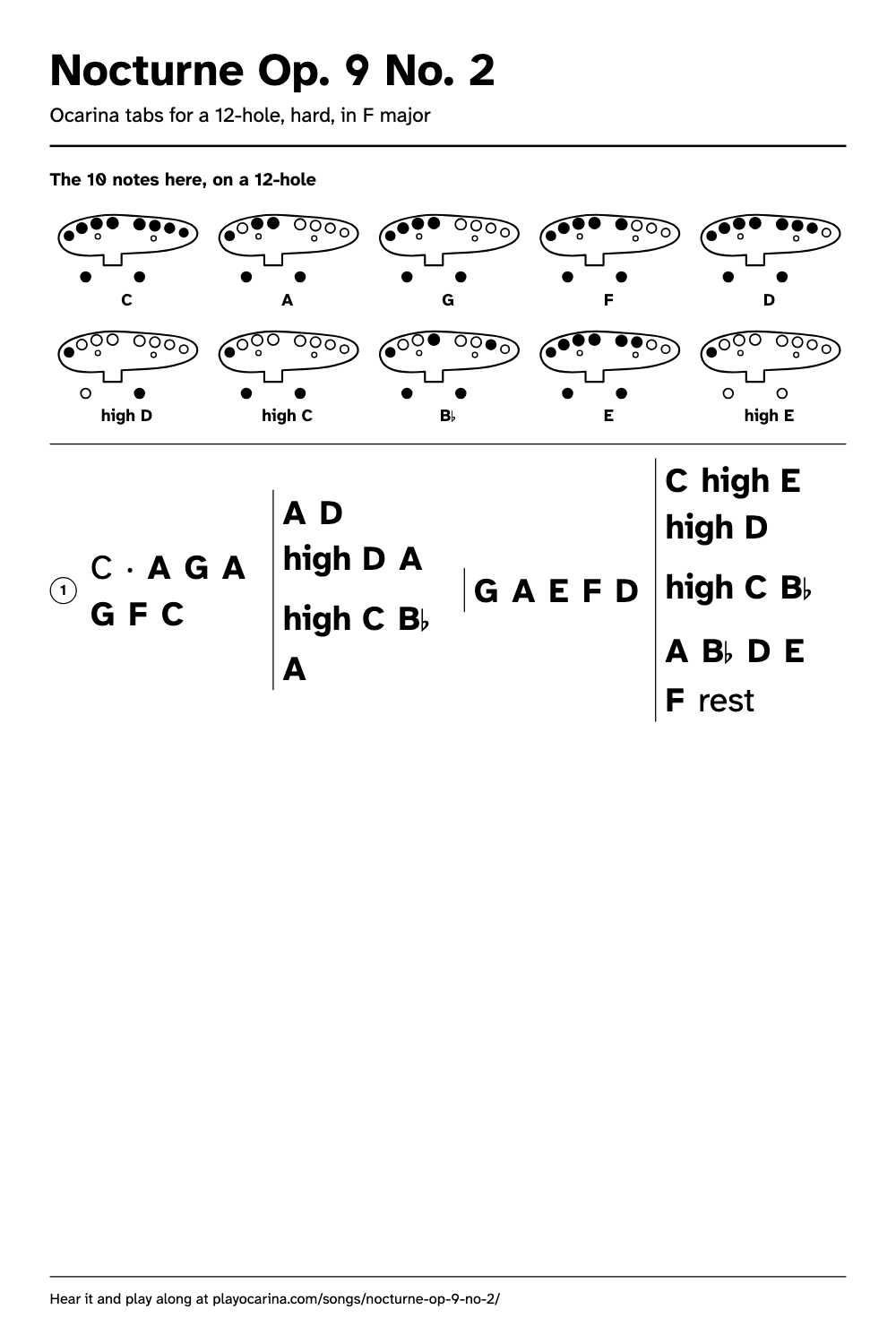
On a 12-hole. Read left to right, a line at a time.
- C AGAGFCTricky spot:ADhigh DAhigh CB♭AGAEFDChigh Ehigh Dhigh CB♭AB♭DEFrest
Chopin's Nocturne in E-flat starts on one short C, holds a long A, sways G, A, G down to F, then leaps from D up to high D and settles on a long high C: a slow, singing tune over a rocking accompaniment. Here is its opening phrase, the four bars of 12/8 the whole nocturne keeps returning to, moved up from E-flat into F major. It runs from C to high E, so it fits a 12-hole ocarina and a 6-hole one.
What is the tricky spot in Nocturne Op. 9 No. 2?
The leap in the second bar, from a short D straight up an octave to high D, the widest jump in the tune after the one in the last bar. On a 12-hole, Nocturne Op. 9 No. 2 goes from D to high D: you lift the left ring, left middle, left index, right index, right middle, right ring and left thumb. On a 6-hole, you lift the left middle, left index, right index and right thumb.
The low D lasts only half a beat, so the fingers have to be ready for high D before you play it: practise the pair slowly, D then high D, until the top note starts cleanly without a crack. Give the high note a little more breath, not a harder push. The last bar asks the same thing from C to high E, then rolls through six quick notes, high C, B flat, A, B flat, D, E, to a long F: learn that run slowly first, and only speed it up once every note sounds.
Which ocarina can play Nocturne Op. 9 No. 2?
A 4-hole ocarina cannot reach high D and high E, so play Nocturne Op. 9 No. 2 in this key on a 12-hole or 6-hole ocarina in C. On an ocarina in G or F, use the same fingerings: the tune sounds in a different key, which is fine when you play alone. Each linked chart has every fingering for its ocarina, and you can check your notes with a tuner such as our free ocarina tuner.
The 10 notes here, on a 12-holeHoles in words, with a picture
| Note | Holes to cover | Picture |
|---|---|---|
| C | Cover every main hole | |
| A | Cover the left pinky, left middle, left index, left thumb and right thumb | |
| G | Cover every main hole but the right index, right middle, right ring and right pinky | |
| F | Cover every main hole but the right middle, right ring and right pinky | |
| D | Cover every main hole but the right pinky | |
| high D | Cover the left pinky and right thumb | |
| high C | Cover the left pinky, left thumb and right thumb | |
| B♭ | Cover the left pinky, left index, right ring, left thumb and right thumb | |
| E | Cover every main hole but the right ring and right pinky | |
| high E | Cover the left pinky |
Drawn as you see it while playing: mouthpiece towards you, left hand on the left.
| Note | Holes to cover | Picture |
|---|---|---|
| C | Cover every hole | |
| A | Cover the left index, left thumb and right thumb | |
| G | Cover every hole but the left middle and right middle | |
| F | Cover every hole but the right middle and right index | |
| D | Cover every hole but the right middle | |
| high D | Cover the left thumb | |
| high C | Cover the left thumb and right thumb | |
| B♭ | Cover the right index, left thumb and right thumb | |
| E | Cover every hole but the right index | |
| high E | All holes open |
Drawn as you see it while playing: mouthpiece towards you, left hand on the left.
When did Chopin write the Nocturne in E-flat?
Between 1831 and 1832, when he was about twenty: Chopin wrote the three Op. 9 nocturnes in those years, his first published set of nocturnes. Our tabs follow the first edition by Fr. Kistner of Leipzig, whose title page dedicates the set to Madame Camille Pleyel and names Schlesinger as the Paris publisher. The tabs teach the opening theme, bars 1 to 4, without the turn printed over the high note; each time the theme comes back Chopin decorates it with more runs and trills. Chopin died in Paris in 1849. We show the melody only. Music: Frédéric Chopin (1810-1849), the second of his three Nocturnes, Op. 9, 1832.