Ride of the Valkyries on the ocarina
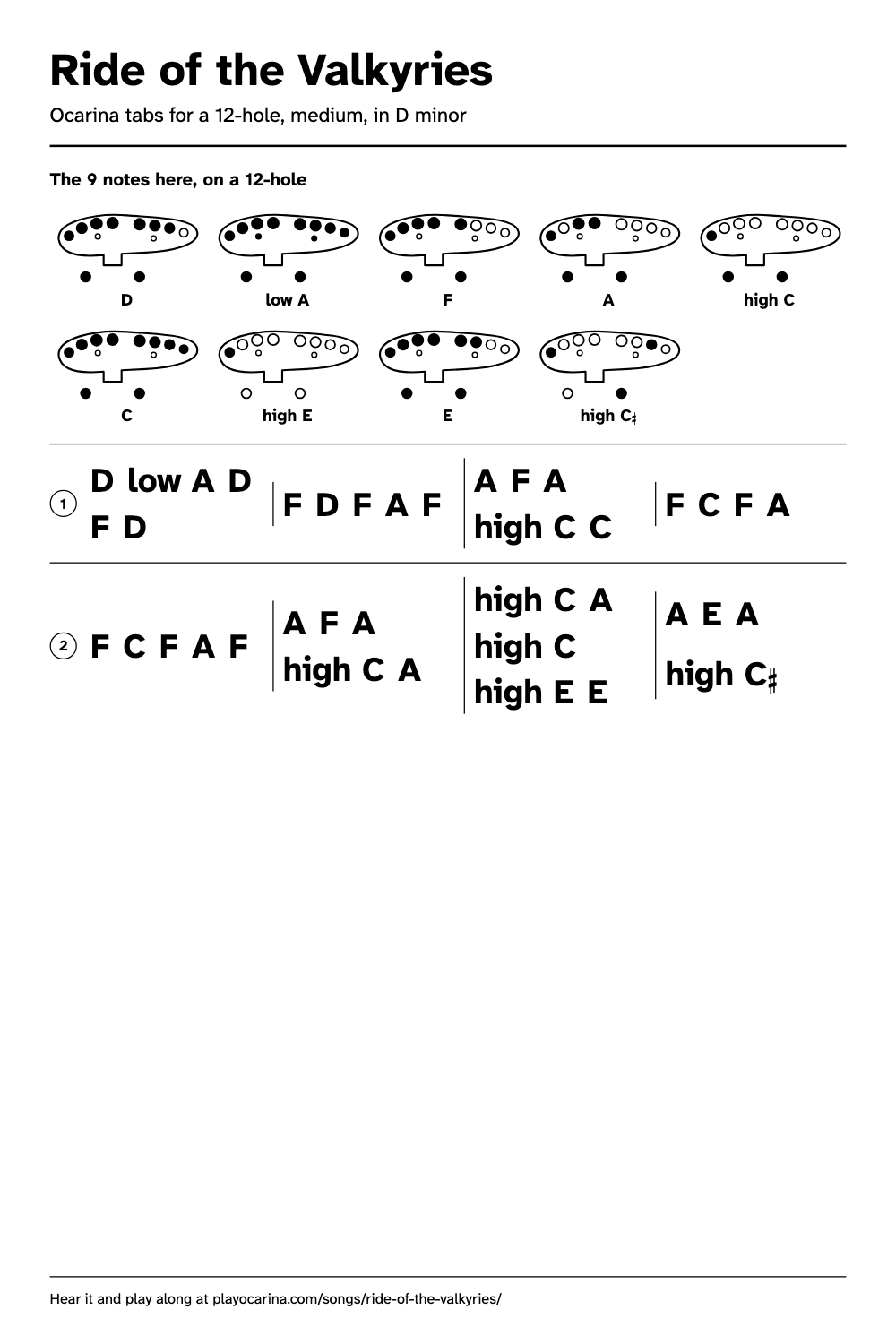
On a 12-hole it starts D, low A, D, F. Medium, 38 notes, in D minor.
Goes up to high E, so it does not fit a 4-hole. Goes down to low A, so it does not fit a 6-hole.
Ride of the Valkyries
Bar 1 of 8
What are the notes for the Ride of the Valkyries?
On a 12-hole. Read left to right, a line at a time.
- Dlow ADFDFDFAFTricky spot:AFAhigh CCFCFA
- FCFAFAFAhigh CAhigh CAhigh Chigh EEAEAhigh C♯
The Ride of the Valkyries gallops: D, a quick A, D, then a long F and D, and the same short-short-long figure starts again on F, then on A. Here is the main theme, simplified: Wagner's two statements of it, joined into eight bars of 9/8 in D minor, from low A up to high E. It needs a 12-hole ocarina.
How do you play the gallop in the Ride of the Valkyries?
The end of the third bar, where the tune leaps from high C straight down an octave to the low C; the same drop comes again in bar 7, from high E to E. On a 12-hole, the Ride of the Valkyries goes from high C to C: you cover the left ring, left middle, left index, right index, right middle, right ring and right pinky.
Every bar starts with the same gallop, a dotted note, a very short one and a medium one, like "ta-ka-ta", before two long notes. Tongue it lightly and keep the short note really short, then lean on the long notes: the printing marks the theme stark accentuiren, strongly accented. For the octave drops, keep the fingers moving together and soften the breath as you land on the low note, or it will jump up. Our player starts at 90 beats a minute; the printing marks the music only Lebhaft, lively.
Where do you breathe in the Ride of the Valkyries?
Breathe after the long A that ends bar 4, where the two statements meet, and, if you need more air, after the long note that ends any other bar.
Which ocarina can play the Ride of the Valkyries?
A 6-hole ocarina cannot reach low A, and a 4-hole ocarina cannot reach low A, high C♯ and high E, so play the Ride of the Valkyries in this key on a 12-hole ocarina in C. On an ocarina in G or F, use the same fingerings: the tune sounds in a different key, which is fine when you play alone. The linked chart has every fingering, and you can check your notes with a tuner such as our free ocarina tuner.
The 9 notes here, on a 12-holeHoles in words, with a picture
| Note | Holes to cover | Picture |
|---|---|---|
| D | Cover every main hole but the right pinky | |
| low A | Cover every main hole, plus the left sub-hole and right sub-hole | |
| F | Cover every main hole but the right middle, right ring and right pinky | |
| A | Cover the left pinky, left middle, left index, left thumb and right thumb | |
| high C | Cover the left pinky, left thumb and right thumb | |
| C | Cover every main hole | |
| high E | Cover the left pinky | |
| E | Cover every main hole but the right ring and right pinky | |
| high C♯ | Cover the left pinky, right ring and right thumb |
Drawn as you see it while playing: mouthpiece towards you, left hand on the left.
Where does the Ride of the Valkyries theme come from?
It opens the third act of Die Walküre, the second opera of Wagner's Ring cycle: the Valkyries gather on a mountain peak, and the orchestra carries the tune while they call to each other above it. Wagner first wrote the theme down on 23 July 1851. After the opera's premiere in Munich in 1870 he refused to let the Ride be played on its own, and lifted the ban only after the whole Ring was staged at Bayreuth in 1876. Our tabs follow Karl Klindworth's piano score, published by Schott in Mainz in 1865, where the theme is shared between the two hands and marked stark accentuiren, strongly accented, under fast running notes. We take its first two statements, the second a third higher than the first, and leave out the three bars of running notes between them; the whole tune moves up from B minor to D minor, with every note at the printing's octave. Wagner died in 1883. We show the melody only. Music: Richard Wagner (1813-1883), the prelude to Act 3 of his opera Die Walküre.