The Blue Danube on the ocarina
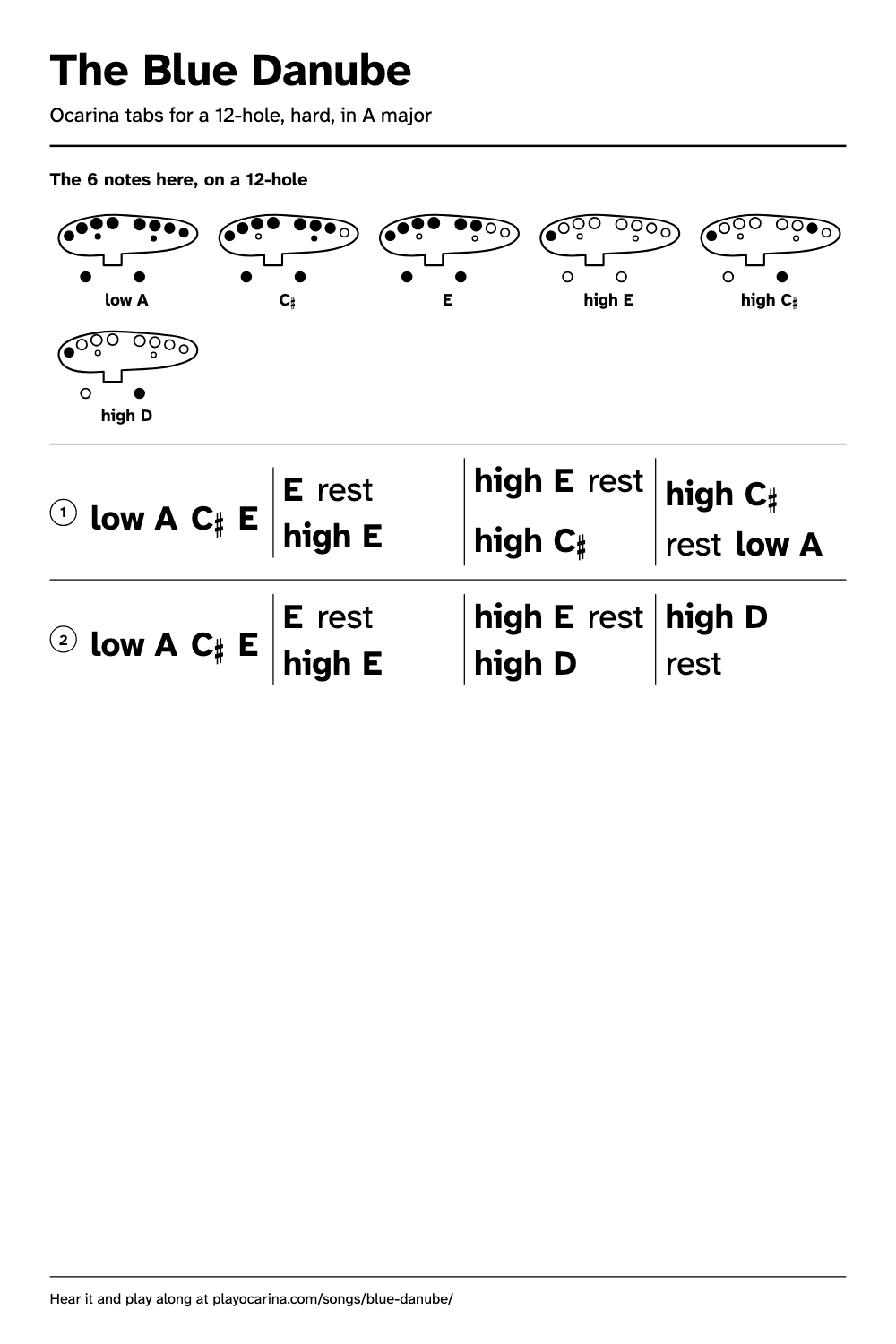
On a 12-hole it starts low A, C♯, E, E. Hard, 17 notes, in A major.
Goes up to high E, so it does not fit a 4-hole. Goes down to low A, so it does not fit a 6-hole.
The Blue Danube
Bar 1 of 8
What are the notes for the Blue Danube?
On a 12-hole. Read left to right, a line at a time.
- low AC♯EEresthigh Ehigh Eresthigh C♯Tricky spot:high C♯restlow A
- low AC♯EEresthigh Ehigh Eresthigh Dhigh Drest
The Blue Danube opens its first waltz with a slow rising chord, A, C♯, E, then a beat's rest and two light notes an octave higher. This is the main theme, the first eight bars of Waltz No. 1, in the rhythm of Strauss's own 1867 piano edition, moved from D major to A major, from low A to high E. It is two four-bar phrases: the first answers with high E and C♯, the second with high E and D.
What is the tricky spot in the Blue Danube?
The drop from high C♯ to low A in the fourth bar, more than an octave, which starts the second phrase. On a 12-hole, the Blue Danube goes from high C♯ to low A: you cover the left ring, left middle, left index, right index, right middle, right pinky, left thumb, left sub-hole and right sub-hole.
In the printing each answering pair is a light chord after a quarter rest, with a quick grace note in front; we leave the grace notes out. Play the rising A, C♯, E smoothly on one breath, then tongue the two high notes short, like the waltz's lift. Before the low A, slow the air right down: with every hole covered a 12-hole needs only a gentle breath, and blowing as hard as for high C♯ makes it squeak. Practise the jump on its own, C♯ then A, until the low note speaks first time.
Which ocarina can play the Blue Danube?
A 6-hole ocarina cannot reach low A, and a 4-hole ocarina cannot reach low A, high C♯, high D and high E, so play the Blue Danube in this key on a 12-hole ocarina in C. On an ocarina in G or F, use the same fingerings: the tune sounds in a different key, which is fine when you play alone. The linked chart has every fingering, and you can check your notes with a tuner such as our free ocarina tuner.
The 6 notes here, on a 12-holeHoles in words, with a picture
| Note | Holes to cover | Picture |
|---|---|---|
| low A | Cover every main hole, plus the left sub-hole and right sub-hole | |
| C♯ | Cover every main hole but the right pinky, plus the right sub-hole | |
| E | Cover every main hole but the right ring and right pinky | |
| high E | Cover the left pinky | |
| high C♯ | Cover the left pinky, right ring and right thumb | |
| high D | Cover the left pinky and right thumb |
Drawn as you see it while playing: mouthpiece towards you, left hand on the left.
Was the Blue Danube first a song?
Yes. Strauss wrote it in 1866 for the Vienna Men's Choral Association, which first performed it on 15 February 1867 with words by its poet, Joseph Weyl; the orchestral version he made for the Paris World's Fair that year is the one heard today. Our tabs follow Strauss's own piano edition, published by C. A. Spina in Vienna in 1867, whose cover is dedicated to the choral association; we moved it from D major to A major and kept each phrase in its printed octave. Strauss died in 1899. We show the melody only. Music: Johann Strauss II (1825-1899), the first waltz of An der schönen blauen Donau, Op. 314, 1867.