Nessun dorma on the ocarina
On a 12-hole it starts A, B, high C, B. Hard, 42 notes, in C major.
Goes up to high D, so it does not fit a 4-hole. Goes down to low B, so it does not fit a 6-hole.
Nessun dorma
Bar 1 of 10
What are the notes for Nessun dorma?
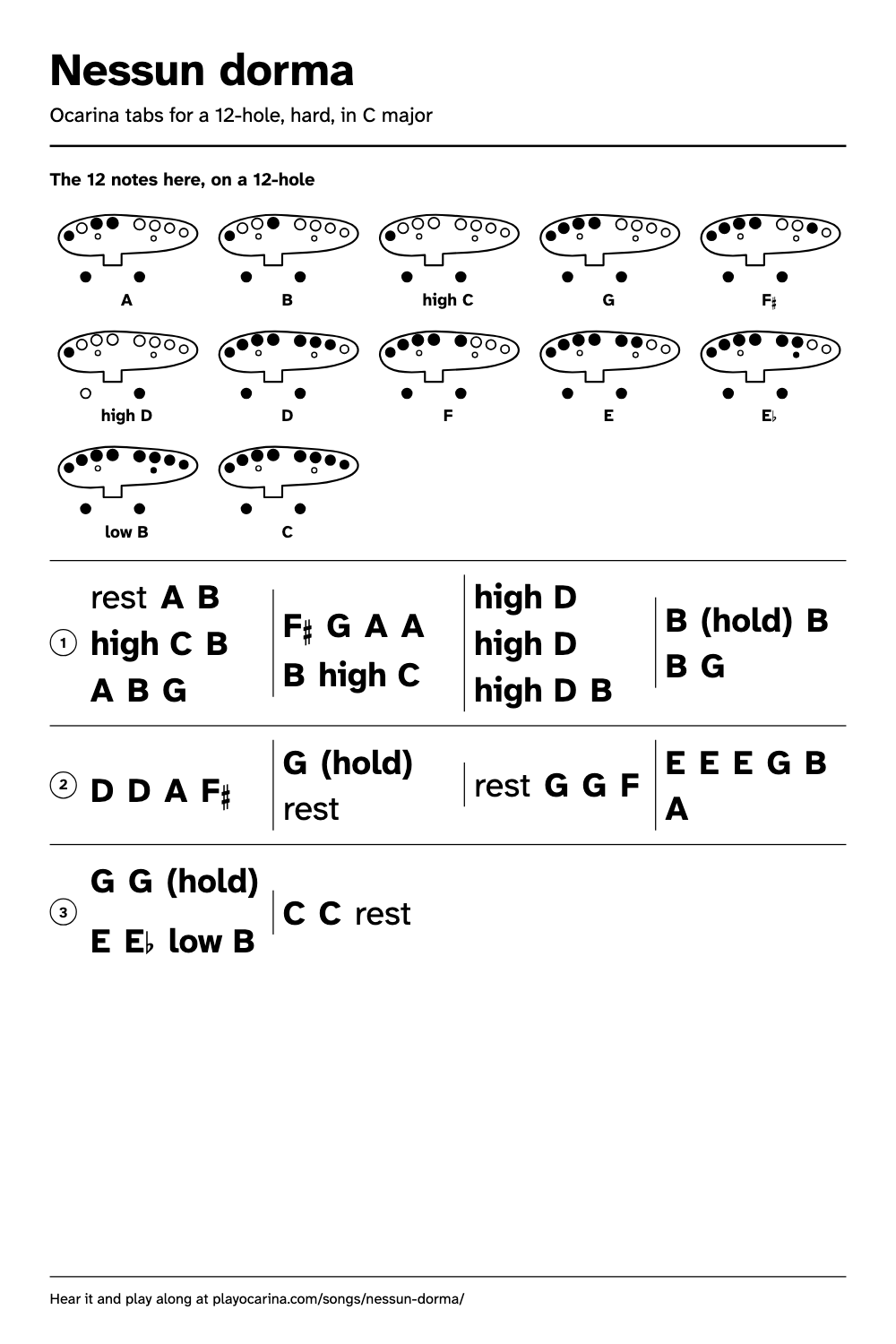
On a 12-hole. Read left to right, a line at a time.
- restABhigh CBABGF♯GAABhigh Chigh Dhigh Dhigh DBB(hold)BBG
- DDAF♯G(hold)restrestGGFEEEGBA
- Tricky spot:GG(hold)EE♭low BCCrest
Nessun dorma's main theme climbs A, B, high C, B, A, then rises again to four high D's: the tenor tune made famous by Pavarotti. Here are ten bars of it in C major, from the theme's second phrase to the end of its first verse in Act 3, in the rhythm of the 1926 vocal score. It runs from low B to high D, so it needs a 12-hole ocarina.
Where does Nessun dorma get hard on the ocarina?
The end of the theme, where E slides down to E flat and then drops to low B, the one note below low C, before the tune settles on C. On a 12-hole, Nessun dorma goes from E♭ to low B: you cover the right ring and right pinky.
Low B is a sub-hole note on a 12-hole: cover every main hole and the small hole under the right thumb, and blow gently, because a low note cracks if you push it. The E flat before it is only three quarters of a beat and the B a quarter, so practise the last two bars slowly until the fingers move from E flat to B as one change. At the other end of the tune, the four high D's in the third bar are the climax: they need a little more air, but keep the first one, two beats long, steady rather than loud. The 1926 score marks the theme to be sung smoothly, so tongue softly and let the notes join.
Which ocarina can play Nessun dorma?
A 6-hole ocarina cannot reach low B, and a 4-hole ocarina cannot reach low B and high D, so play Nessun dorma in this key on a 12-hole ocarina in C. On an ocarina in G or F, use the same fingerings: the tune sounds in a different key, which is fine when you play alone. The linked chart has every fingering, and you can check your notes with a tuner such as our free ocarina tuner.
The 12 notes here, on a 12-holeHoles in words, with a picture
| Note | Holes to cover | Picture |
|---|---|---|
| A | Cover the left pinky, left middle, left index, left thumb and right thumb | |
| B | Cover the left pinky, left index, left thumb and right thumb | |
| high C | Cover the left pinky, left thumb and right thumb | |
| G | Cover every main hole but the right index, right middle, right ring and right pinky | |
| F♯ | Cover every main hole but the right index, right middle and right pinky | |
| high D | Cover the left pinky and right thumb | |
| D | Cover every main hole but the right pinky | |
| F | Cover every main hole but the right middle, right ring and right pinky | |
| E | Cover every main hole but the right ring and right pinky | |
| E♭ | Cover every main hole but the right ring and right pinky, plus the right sub-hole | |
| low B | Cover every main hole, plus the right sub-hole | |
| C | Cover every main hole |
Drawn as you see it while playing: mouthpiece towards you, left hand on the left.
Where does Nessun dorma come from?
It is the prince's aria at the start of the last act of Puccini's opera Turandot: he has set the princess the task of guessing his name by dawn, and she has ordered that nobody in the city may sleep until she does. Puccini died in 1924 with the opera unfinished, and it was first staged in Milan on 25 April 1926; Franco Alfano wrote the ending, but Puccini had finished the third act up to the death of the slave girl Liù, so this aria is his own. Our tabs follow the tenor line of Ricordi's 1926 vocal score, a fourth higher than written, and start where the theme's second phrase begins, after a short two-beat bar. The tune reached far beyond the opera house when Pavarotti's recording became the BBC's theme for the 1990 World Cup. We show the melody only. Music: Giacomo Puccini (1858-1924), the tenor aria from Act 3 of his opera Turandot, first staged in 1926.